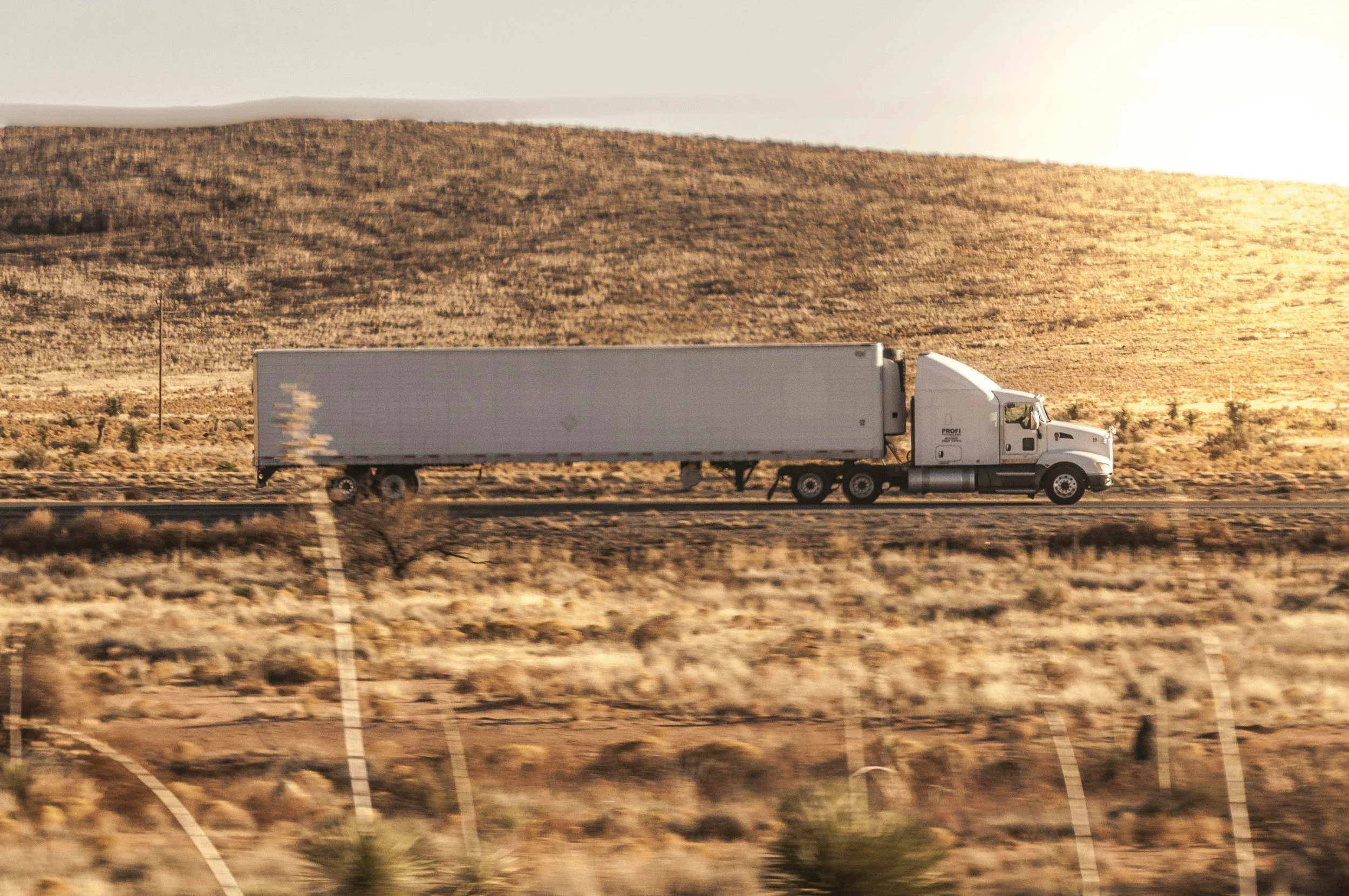
Trucking Companies Have Teams at the Scene Within Hours. You Need Someone Moving Just as Fast.
Big rig cases aren't just bigger car accident cases. They're governed by federal law, involve multiple defendants, and hinge on electronic evidence that disappears within days. Treating them like ordinary auto accidents is one of the most costly mistakes an injured victim can make.
Why Insurance Carriers Handle Trucking Cases Differently — And Why Attorney Selection Matters More Here Than Anywhere Else
Commercial trucking insurance carriers operate at a different level than ordinary auto insurance carriers. Trucking policies typically carry limits of $1 million to $5 million or higher. The defense counsel handling these cases are specialists in federal trucking litigation. And critically, the carriers know exactly which plaintiff's attorneys understand the Federal Motor Carrier Safety Regulations, which know how to obtain and interpret electronic control module data, and which will actually take these cases to trial.
The difference between attorney representation matters more in trucking cases than in almost any other personal injury category. A trucking case handled by a general PI attorney who accepts the police report at face value and negotiates with the adjuster produces one range of outcomes. The same case handled by counsel who serves a spoliation letter within days, obtains the electronic control module data, identifies every FMCSR violation, and pursues every liable party produces recoveries that can be multiples higher.
From my office at 305 Railroad Avenue in Nevada City, I handle every trucking case with the urgency and technical depth these cases require. Immediate spoliation letters. Federal regulatory analysis. Electronic data preservation. Systematic identification of every potentially liable party. That's how trucking cases produce recoveries that actually reflect the catastrophic nature of these collisions.
When Cases Need Big-City-Firm Resources — You Get Both
Some commercial trucking cases are too complex, too catastrophic, or too resource-intensive for any local practice — no matter how experienced — to handle alone. Multi-vehicle pileup cases involving out-of-state defendants and federal court litigation. Catastrophic cases requiring seven-figure investment in expert witnesses and reconstruction. Cases against national trucking companies with defense teams that operate at a scale local counsel can't match on its own.
When a case warrants that level of resources, I associate top big-city trucking counsel as co-counsel. Through 25+ years of California civil practice, I've developed relationships with some of the best commercial trucking litigation firms in the country. When your case needs that level of firepower, I bring it in — as active co-counsel working with me on your case, not by referring you away.
Direct Local Attorney Access
I remain your attorney of record and your direct point of contact. When you call, you reach me — not a case manager, not a screener, not an intake associate at a big-city firm.
Big-City-Firm Litigation Muscle
Full-service trucking litigation infrastructure, national expert witness networks, and the resources to litigate against any commercial trucking defendant in the country.
No Additional Fee to You
The contingency percentage stays exactly the same. Associated counsel and I share the fee under California Rule of Professional Conduct 1.5.1. You pay what you'd pay for local representation alone.
Not every case requires this level of resources — most Nevada County trucking cases are well within the scope of what experienced local trial counsel handles effectively. But when a case does warrant big-city co-counsel, you get both: the local attorney who knows your community and takes your call, and the specialized litigation resources of a top big-city firm. This is a genuinely uncommon combination among Nevada County injury attorneys, and it's specifically valuable in catastrophic trucking cases where the resources on the defense side are substantial.
Why Trucking Cases Are Fundamentally Different
Commercial trucking is regulated by the Federal Motor Carrier Safety Regulations (FMCSR) — a comprehensive body of federal law covering driver hours, vehicle maintenance, drug and alcohol testing, cargo securement, driver qualification, and record-keeping. Violations of these regulations aren't just paperwork problems; they're direct evidence of negligence that transforms case value.
Federal jurisdiction and multi-state complexity
Trucking cases frequently involve out-of-state defendants — the trucking company incorporated in one state, the driver domiciled in another, the cargo owner in a third. Federal jurisdiction under 28 U.S.C. §1332 (diversity) is common in trucking cases, and cases can proceed in federal court when the amount in controversy exceeds $75,000 and diversity exists. Federal court practice is different from state court practice — different discovery rules, different judges, different jury pools, and different case management timelines.
Multiple defendant liability
A single trucking accident often involves 4-6 potentially liable defendants: the driver, the motor carrier (trucking company), the vehicle owner (may differ from carrier), the cargo shipper, the cargo loader, and third-party maintenance contractors. Each defendant may have separate insurance coverage, separate liability exposure, and separate strategic interests. Properly identifying and pursuing each defendant is essential to maximizing recovery.
Electronic evidence that disappears quickly
Modern commercial trucks generate substantial electronic data: the Electronic Control Module (ECM or "black box") captures speed, braking, throttle, and mechanical data. Electronic Logging Devices (ELDs) record hours of service. GPS systems track routes and stops. This data can be legally destroyed under routine record retention policies within days or weeks of the accident. Preserving it requires immediate action.
Truck Accident Types & Causes
Commercial truck accidents fall into distinct categories, each with characteristic mechanisms, injury patterns, and liability analysis. Understanding what type of accident you were involved in matters because the evidence needed to prove the case differs by accident type.
Rear-End Collisions
Commercial trucks require substantially longer stopping distances than passenger vehicles — a fully loaded 80,000-pound truck traveling at highway speed needs the length of two football fields to stop. Following too closely, driver inattention, or fatigue-related delayed reactions produce catastrophic rear-end impacts on passenger vehicles. FMCSR §392.6 addresses following distance and safe operating practices.
Underride Collisions
Occurs when a passenger vehicle slides beneath the trailer of a truck. Underride crashes are frequently fatal because the trailer shears through the passenger compartment at head level. Rear underride guards are required by federal regulation but often fail in real-world crashes. Side underride guards are inconsistently required and frequently missing. These cases warrant product liability analysis in addition to standard negligence claims.
Jackknife Accidents
When a truck's trailer swings out from behind the cab at an angle, forming an "L" or "V" shape. Common on I-80 Donner Pass in winter conditions and on the winding sections of Highway 20 and Highway 174. Causes include braking on ice, downhill grade speed loss, sudden evasive maneuvers, and overloaded or improperly loaded cargo. Jackknifed trucks frequently block multiple lanes and produce multi-vehicle pileups.
Rollover Accidents
Commercial trucks have high centers of gravity, particularly when carrying tall loads or liquid cargo. Tight curves, sudden lane changes, and evasive maneuvers can produce rollovers that block roadways and endanger nearby vehicles. Highway 20 curves and Highway 174 mountain sections produce recurring rollover accidents. Overloaded trucks and improperly secured cargo increase rollover risk substantially.
Wide Turn and Blind Spot Accidents
Commercial trucks have substantial blind spots ("no-zones") to the right rear, immediately in front, and along both sides. Right-turn collisions occur when trucks swing wide to negotiate turns and passenger vehicles are struck by the trailer. Lane change accidents happen when drivers fail to check blind spots. Highway 49 through Grass Valley and Nevada City sees regular right-turn and lane-change accidents involving commercial trucks.
Cargo-Related Accidents
Improperly loaded, improperly secured, or overweight cargo produces distinct accident patterns. Shifting loads cause loss of vehicle control; unsecured cargo becomes projectile hazards; overweight loads produce brake failures on grades. FMCSR §393.100 governs cargo securement. Cargo-related accidents often involve separate cargo loader defendants and cargo shipper liability.
Common causes beyond accident type
Beyond the type of collision, most trucking accidents involve one or more of these underlying causes: driver fatigue and hours of service violations, driver impairment (alcohol, drugs, prescription medications), inadequate driver training or qualification, defective equipment or inadequate maintenance, speeding on grades or in adverse conditions, distracted driving including phone use, weather-related loss of control, and improperly loaded or overweight cargo. Each underlying cause implicates different FMCSR provisions and different potential defendants.
Investigating Truck Accidents — The First 72 Hours Matter Most
In trucking cases, evidence has a very short shelf life. Electronic data gets overwritten. Physical evidence gets repaired or destroyed. Witnesses forget details. Within hours of a serious trucking accident, the carrier's insurance company typically dispatches an investigative team to the scene — protecting the company's interests before injured victims have even left the hospital.
The Spoliation Letter — Day One Priority
The single most urgent task after a trucking accident is sending a spoliation letter — a formal legal demand that the trucking company preserve all electronic data, maintenance records, driver logs, physical evidence, and communications related to the accident. Without this letter, evidence can be legally destroyed under routine record retention policies. The letter needs to go out within days of the crash, not weeks. Serving it also creates evidence of intentional destruction if the company later fails to preserve what was demanded.
Electronic Control Module (ECM) Data
Modern commercial trucks contain an ECM (also called an "event data recorder" or "black box") that captures pre-crash speed, braking, throttle position, cruise control status, engine RPM, and other mechanical data. ECM data is often the single most valuable evidence in a trucking case because it provides objective information about what the truck was actually doing in the seconds before impact. ECM downloads require specific equipment and expert interpretation.
Electronic Logging Devices (ELDs) and Hours of Service Records
Federal regulation now requires ELDs on most commercial trucks — automated recording of driver hours, driving time, on-duty time, and rest breaks. ELD data reveals whether the driver was in compliance with hours of service regulations or driving in violation of federal limits. Hours-of-service violations are a common contributing factor in fatigue-related crashes and produce direct FMCSR liability against the motor carrier.
Maintenance Records and DOT Inspection History
FMCSR requires trucking companies to maintain systematic inspection and maintenance records. DOT inspection reports, roadside inspection results, and internal maintenance logs reveal whether equipment problems contributed to the crash — brake failures, tire problems, lighting defects, coupling issues. Companies that skip maintenance or ignore inspection findings face direct liability for equipment-related crashes.
Driver Qualification Files
FMCSR §391 requires trucking companies to maintain driver qualification files documenting licensing, medical certification, drug and alcohol testing history, employment verification, and driving record. Gaps or failures in the driver qualification file — hiring drivers without proper CDL endorsements, failing to conduct required drug testing, ignoring red flags in driving records — create negligent hiring and retention claims against the motor carrier.
Scene Reconstruction and Physical Evidence
Physical evidence at the accident scene disappears quickly. Skid marks fade, debris gets cleared, road markings weather, and vehicles get repaired or scrapped. Prompt scene documentation by an accident reconstruction expert — photography, measurements, road condition documentation, sight-distance analysis — preserves evidence that can be reconstructed months later during litigation. In serious cases, coordination with California Highway Patrol MAIT (Multidisciplinary Accident Investigation Team) may occur.
Injured in a Nevada County trucking accident? The evidence starts disappearing immediately. Let's talk today.
Call Michael: (530) 265-0186Truck Accident Injuries — Why They're Catastrophic
The physics of commercial truck collisions produce injury patterns categorically different from passenger vehicle accidents. A fully loaded commercial truck weighs 20-30 times what a passenger vehicle weighs. In a collision, that massive weight differential concentrates enormous force on the smaller vehicle and its occupants. Injuries in serious trucking accidents are frequently catastrophic and often life-changing.
Traumatic Brain Injury
Commercial truck impacts frequently produce serious TBI ranging from concussion to catastrophic brain injury. Underride collisions in particular produce catastrophic head trauma when the trailer shears through the passenger compartment at head level. Even in survivable trucking crashes, the forces involved commonly produce moderate to severe TBI requiring extensive rehabilitation and often producing permanent cognitive impairment.
Spinal Cord Injuries and Paralysis
The forces involved in trucking crashes routinely produce catastrophic spinal cord injuries — compression fractures, dislocations, complete and incomplete cord injuries producing partial or full paralysis. Cervical spine injuries can produce quadriplegia; thoracic and lumbar injuries produce paraplegia. Life care planning for spinal cord injury cases routinely reaches into the millions and lifetime costs frequently exceed $5 million.
Crush Injuries and Amputations
When a passenger vehicle is crushed by a truck's weight or trapped under a trailer, occupants can sustain catastrophic crush injuries to limbs, internal organs, and body cavities. Amputations — traumatic at the scene or surgical due to unsalvageable tissue damage — occur in serious trucking cases. Prosthetic care, rehabilitation, and adaptive equipment costs continue throughout the injured person's lifetime.
Multiple Fractures and Orthopedic Injuries
The impact forces in commercial truck collisions routinely produce multiple simultaneous fractures — long bone fractures, pelvic fractures, complex facial fractures, and multi-level spine fractures. Surgical stabilization, internal fixation, and multiple staged surgeries are common. Long-term consequences include chronic pain, reduced range of motion, hardware complications, and post-traumatic arthritis.
Internal Organ Injuries
Blunt force trauma from truck collisions frequently produces internal bleeding, liver and spleen lacerations, kidney injuries, ruptured diaphragms, and cardiac contusions. These injuries are sometimes not immediately apparent at the scene and can be life-threatening. Ongoing medical monitoring, imaging, and surgical interventions may continue for months or years after the initial trauma.
Burns and Thermal Injuries
Trucking accidents involving fuel spills, hazardous materials, or cargo fires produce serious burn injuries. Commercial trucks carry substantial fuel loads (100-300 gallons of diesel), and cargo may include flammable or hazardous materials. Burn injuries require specialized treatment at burn centers, produce permanent scarring, and often require multiple reconstructive surgeries over years.
Fatal Truck Accidents — Wrongful Death and Survival Actions
Commercial truck accidents produce disproportionate fatality rates. When a passenger vehicle collides with a fully loaded commercial truck, the size and weight differential frequently produces fatal outcomes. Nevada County families who have lost loved ones in trucking accidents face both extraordinary grief and complex legal proceedings.
Two separate legal claims
California law provides two distinct claims when death results from a wrongful act:
- Wrongful death claims under Code of Civil Procedure §377.60 are brought by the surviving heirs (typically spouse and children) for the losses they suffered as a result of the death — loss of financial support, loss of companionship, loss of guidance and household services. These claims focus on the impact of the death on the survivors.
- Survival actions under Code of Civil Procedure §377.30 are brought by the estate for the damages the decedent suffered between injury and death — pre-death medical expenses, lost wages during the survival period, and (importantly) pre-death pain and suffering when the decedent survived even briefly after the accident.
Damages in fatal trucking cases
Fatal trucking cases routinely produce among the largest recoveries in personal injury litigation. Available damages include: lifetime economic support the decedent would have provided, funeral and burial expenses, loss of consortium and companionship, loss of household services, and pre-death pain and suffering through the survival action. When the decedent was a working-age adult with dependents, economic loss calculations often reach seven figures alone.
Time-sensitive investigation
Fatal trucking cases require particularly urgent investigation because the surviving family cannot describe what happened. Electronic evidence, physical scene evidence, and witness testimony become the entire basis of the case. Delay in investigation can be catastrophic to case value.
Who Can Be Liable in a Truck Accident Case
Identifying every potentially liable defendant is essential to maximizing recovery in trucking cases. Unlike passenger vehicle accidents where liability typically rests with a single driver, trucking cases routinely involve multiple defendants with independent liability theories.
The Truck Driver
The primary defendant in most trucking cases. Personally liable for negligent operation of the commercial vehicle. In cases involving intoxication, extreme fatigue, or willful FMCSR violations, punitive damages may be available under Civil Code §3294. The driver's personal assets are typically limited, but personal liability matters for punitive damages that aren't covered by the trucking company's insurance.
The Motor Carrier (Trucking Company)
Under principles of vicarious liability and direct negligence, the trucking company is typically the primary financial defendant. Commercial trucking policies routinely carry limits of $1 million to $5 million or higher, with additional excess coverage often available. Direct claims against the carrier include negligent hiring, negligent training, negligent supervision, negligent retention, and failure to enforce federal regulations. These claims often produce recoveries beyond simple vicarious liability.
The Vehicle Owner (Separate from Motor Carrier)
The tractor and trailer are often owned by different entities than the motor carrier operating them. Leasing arrangements are common in commercial trucking — the driver may work for one company, the tractor may be owned by another, and the trailer by a third. Each owner has independent liability under Vehicle Code §17150 and negligent entrustment theories when the equipment was defective or improperly maintained.
Cargo Shipper and Loader
FMCSR §392.9 requires that cargo be properly loaded and secured. When cargo is improperly loaded, overloaded, or improperly secured, the shipper (who arranged the freight) and the loader (who physically loaded the cargo) may share liability — often separate entities from the motor carrier. Shipper and loader liability applies particularly in rollover accidents, cargo spill accidents, and accidents where load shift contributed to loss of control.
Maintenance Contractors
Commercial trucking companies frequently outsource maintenance to third-party service providers. When mechanical failure contributes to the accident — brake failure, tire failure, coupling failure, lighting defects — the maintenance contractor may share liability under negligence and breach of warranty theories. Discovery of maintenance records typically identifies which contractors performed which work.
Equipment Manufacturers
Defective truck equipment — failed brake systems, defective tires, inadequate underride guards, defective coupling systems, defective steering — can support product liability claims against manufacturers under strict liability, negligence, and breach of warranty theories. Product liability claims frequently expand recovery substantially and may support punitive damages when manufacturers knew about defects and failed to correct them.
Dealing with Trucking Insurance Companies
Commercial trucking insurance carriers operate differently from ordinary auto insurance carriers. The stakes are higher, the defense counsel are specialists, and the tactics reflect the substantial policy limits at issue. Understanding how these carriers actually operate is essential to countering their strategy effectively.
Immediate scene investigation
Within hours of a serious trucking accident, the carrier typically dispatches investigators, accident reconstructionists, and defense counsel to the scene. Their goal is documenting evidence in ways that favor the trucking company — before injured victims have left the hospital. Statements taken at the scene, photographs from defense-friendly angles, and quick interviews of witnesses all become defense evidence. Countering this early activity requires equally prompt plaintiff-side investigation.
Early lowball settlement offers
Trucking carriers sometimes make surprisingly quick settlement offers — often within days or weeks of the accident. These early offers are structured to close claims before the full extent of injuries is documented and before liability theories are developed. An early $50,000 or $100,000 offer in a case that could support $2 million+ recovery is common. Accepting extinguishes the claim entirely regardless of what injuries turn out to be.
Contesting FMCSR violations
Trucking carriers know that FMCSR violations transform case value. Their strategy is to contest, minimize, or hide violations through discovery tactics — objecting to record production, claiming records don't exist, producing incomplete files, and litigating over what has to be disclosed. Countering this requires aggressive discovery, motions to compel, and sometimes discovery sanctions. Attorneys who understand FMCSR discovery mechanics obtain records that attorneys who don't never see.
Sub rosa surveillance and social media investigation
In serious trucking injury cases, defense investigators routinely conduct video surveillance of the injured plaintiff and mine social media accounts for evidence that can be used to minimize claimed injuries. The counter is honest daily living and honest social media behavior — serious injury victims live real lives, and short surveillance clips or social media posts don't capture full functional impairment.
Complex defense structures
Trucking cases often involve multiple insurance carriers — primary carrier, excess carriers, umbrella carriers, and cargo insurance. Coordinating claims across multiple carriers with sometimes-conflicting interests is a specialized undertaking. Add the MCS-90 endorsement (federally required financial responsibility) and the layered coverage picture becomes even more complex. Understanding this structure is essential to maximizing recovery.
Bad faith exposure
When trucking carriers unreasonably delay claim handling, deny valid claims, or refuse to make fair settlement offers, California recognizes bad faith claims that can produce recoveries above policy limits and include punitive damages. Documenting bad faith conduct requires careful correspondence tracking from the beginning of the claim. Attorneys who understand this framework build the bad faith case simultaneously with the underlying injury case.
Filing a Truck Accident Claim — Deadlines That Can Ruin Your Case
Trucking cases have several distinct deadlines, and missing any of them can eliminate your case regardless of how strong the underlying facts are. Prompt action after the accident is essential to preserving every available claim.
California Statute of Limitations
The general statute of limitations for personal injury in California is two years from the date of the accident under Code of Civil Procedure §335.1. Wrongful death claims generally have the same two-year deadline. Missing this deadline typically eliminates the claim entirely, regardless of the strength of the underlying case.
Government Entity Claims
If a government entity may be liable — CalTrans for roadway design, county for road maintenance, city for signage — Cal. Gov. Code §911.2 generally requires filing an administrative claim within 6 months of the accident, not the general two-year period. If any government defendant may be involved, this shortened deadline may control.
Federal Court Diversity Jurisdiction
Trucking cases with out-of-state defendants can be filed in federal court under 28 U.S.C. §1332. Federal court practice differs from state court in discovery rules, case management, and jury pool. Strategic venue decisions — federal or state court — can significantly affect case trajectory and outcome. This analysis happens early in the case.
Evidence Preservation Deadlines
Beyond legal deadlines, evidence preservation deadlines are just as critical. ECM data can be legally destroyed within 30 days. Physical evidence gets repaired or scrapped. Witnesses become harder to reach. The practical deadline for effective investigation is often the first 30-60 days after the accident, well before any legal filing deadline.
⚠ Important: The Deadlines Above Are General Rules — Not Legal Advice for Your Specific Case
California statute of limitations rules include numerous exceptions that can shorten OR extend the applicable deadline in your specific situation. Examples include: claims involving minor plaintiffs (tolling provisions); claims where the injury was not immediately discoverable (delayed discovery rules); cases where the defendant left the state (tolling for defendant absence); cases involving specific insurance provisions with their own contractual deadlines; and complex multi-defendant cases where different deadlines apply to different defendants.
Government entity claims are particularly complex — the 6-month period has its own exceptions, extensions, and late-claim procedures under Cal. Gov. Code §§911.4, 911.6, and 946.6, and different rules apply depending on which government entity is involved and the specific nature of the claim.
Accurate calculation of the deadline that applies to your case requires legal analysis of your specific facts. Do not rely on the general deadlines described above to make decisions about your case. Missing the correct deadline eliminates the claim entirely — no exceptions for good-faith mistakes about which deadline applied.
The safest course of action after any injury is to call an attorney immediately. Initial consultations at Phillips Law Offices are free and confidential — no cost, no obligation, no risk. Don't wait to determine whether you have a case or whether a deadline applies. Call (530) 265-0186 today.
The evidence in your trucking case starts disappearing immediately. Don't wait to consult with an attorney.
Call Michael: (530) 265-0186Nevada County Commercial Truck Corridors — Where Big Rig Accidents Happen
Nevada County sees substantial commercial truck traffic across several distinct corridors, each with its own accident patterns, hazards, and typical case types. Understanding where and how these accidents happen matters for both liability development and case value analysis.
Interstate 80 through Truckee and Donner Pass
Interstate 80 through eastern Nevada County is one of the most dangerous commercial trucking corridors in California. Donner Pass sees continuous heavy commercial truck traffic — interstate freight moving between the Bay Area, Sacramento, Reno, and points east. Winter conditions transform an already-challenging mountain highway into an extraordinarily dangerous corridor. Chain-control requirements are in effect up to 100 days per year. Whiteout conditions reduce visibility to zero within seconds.
Common accident patterns on I-80: jackknifed trucks blocking multiple lanes and producing multi-vehicle pileups; runaway trucks that lost braking on the westbound Donner grade descent; chain-required trucks operating without chains and losing traction; cargo spills from overturned trucks blocking Highway 80 for hours or days. Multi-vehicle pileups involving 10-50 vehicles occur multiple times each winter on I-80 through the Nevada County section.
Federal jurisdiction issues are common in I-80 cases because of out-of-state trucking companies and drivers. Coordination with California Highway Patrol MAIT (Multidisciplinary Accident Investigation Team) is standard in serious I-80 collisions. Winter chain-control regulations under Vehicle Code §27454 create specific liability theories when trucks operated without required chains.
Highway 49 — The Gold Country Commercial Corridor
Highway 49 through Grass Valley and Nevada City sees significant commercial truck traffic serving the Gold Country region. Lumber trucks, aggregate haulers, delivery vehicles, and construction material transport are constant on Highway 49. The corridor mixes commercial traffic with tourism, local commuters, and residential access — producing distinct accident patterns.
Common accident patterns on Highway 49: right-turn collisions at signalized intersections when trucks swing wide to negotiate turns; rear-end collisions in downtown Grass Valley and Nevada City congestion; underride collisions on the winding sections between the cities; blind-spot lane-change accidents involving passenger vehicles alongside commercial trucks. The Highway 49 / McKnight Way / Sutton Way intersection area sees repeated truck-involved accidents.
Highway 20 — East-West Commercial Route
Highway 20 provides east-west commercial connectivity across Nevada County. The section from Nevada City westward toward Marysville and eastward toward the Highway 80 interchange sees substantial commercial truck traffic. Winding rural sections, elevation changes, and limited passing opportunities produce specific commercial truck accident patterns.
Common accident patterns on Highway 20: rollover accidents on the curves, particularly involving overloaded or top-heavy loads; head-on collisions when trucks cross center lines on tight curves; rear-end collisions when commercial vehicles are struck by faster traffic on straightaways; run-off-road accidents in winter conditions on the higher-elevation sections.
Highway 174 — Colfax to Grass Valley Connector
Highway 174 connects I-80 at Colfax to Grass Valley and serves as an alternate commercial route. The winding two-lane road drops several thousand feet in elevation with limited passing zones, sharp curves, and challenging shoulder conditions. Commercial trucks using Highway 174 to avoid I-80 traffic or reach Nevada County destinations directly produce distinctive accident patterns.
Common accident patterns on Highway 174: runaway truck accidents on the descending sections when brakes overheat; head-on collisions on the curves; rollovers in tight-radius curves; rear-end collisions where slower commercial vehicles are struck by frustrated drivers attempting to pass.
Local Commercial Delivery Routes
Beyond the highway corridors, commercial trucks operate throughout Nevada County on local delivery, service, and construction routes. Delivery trucks in downtown Grass Valley and Nevada City, dump trucks and construction vehicles on residential and commercial construction sites, and service vehicles throughout the region all produce their own accident patterns.
Local commercial truck accidents often involve pedestrians, cyclists, parked vehicles, and residential property damage. Backing accidents in parking lots and driveways are common. Delivery truck accidents in downtown areas involve pedestrians and parked vehicles.
Damages in Truck Accident Cases
Because commercial trucking accidents produce catastrophic injuries, damages in these cases are frequently substantial. Serious trucking cases routinely produce recoveries in the high six figures to multi-million dollar range, and catastrophic cases can exceed $10 million when the combination of medical costs, lost earning capacity, and non-economic damages reflects the full impact of the injury.
Past and Future Medical Expenses
Catastrophic trucking injuries produce lifetime medical costs. Life care plans documenting future medical needs — surgeries, rehabilitation, medications, adaptive equipment, home modifications, attendant care — routinely reach seven figures in serious cases and can exceed $10 million in catastrophic spinal cord or traumatic brain injury cases.
Lost Earning Capacity
Serious trucking injuries frequently prevent return to prior employment or reduce earning capacity substantially. Vocational rehabilitation experts and forensic economists quantify the difference between pre-injury earning trajectory and post-injury earning capacity — often producing seven-figure economic loss projections in working-age plaintiff cases.
Pain, Suffering, and Life Impact
California doesn't cap non-economic damages in most personal injury cases. Catastrophic trucking injuries produce non-economic damages that routinely exceed economic damages — pain, disfigurement, loss of enjoyment of life, and psychological impact of catastrophic injury.
Loss of Consortium
Spouses of catastrophically injured trucking victims have their own claim for loss of consortium — the impact on the marital relationship, companionship, and intimacy. In serious cases involving permanent disability, consortium damages can be substantial.
Punitive Damages
Where trucking companies engaged in willful FMCSR violations, ignored known safety hazards, or deployed drivers under conditions demonstrating conscious disregard for safety, punitive damages under Civil Code §3294 become available. Corporate punitive damages against trucking companies can produce substantial additional recovery.
Wrongful Death and Survival
Fatal trucking cases combine wrongful death claims by heirs with survival actions by the estate. These cases routinely produce among the largest recoveries in personal injury litigation because catastrophic economic loss, substantial non-economic damages, and jury sympathy in commercial truck fatality cases all favor plaintiffs.
How Our Fees Work in Truck Accident Cases
All trucking accident representation is provided on a contingency fee basis — no upfront costs, no hourly fees. You pay nothing during the case. Our fee comes from the recovery, and if we don't recover, you owe nothing.
The reality of trucking case timelines
Serious trucking cases rarely resolve pre-litigation at real value. Trucking insurance carriers systematically undervalue these cases at the pre-suit stage because they know most attorneys don't have the resources or expertise to see them through federal court litigation. Cases with catastrophic injuries almost always require filing suit, comprehensive discovery, ECM data recovery, expert deposition, and often trial preparation before the carrier offers realistic settlement value. Cases with clear liability and moderate injuries can sometimes resolve pre-suit at reasonable value, but this is the exception rather than the rule in trucking litigation.
The three-tier contingency structure
- 29% pre-filing — cases that resolve before a lawsuit is filed. In trucking cases, this applies only to relatively minor cases with clear liability where the carrier offers full value pre-suit. Uncommon in serious trucking litigation.
- 33⅓% post-filing — cases that require filing suit but resolve before trial. This is where the substantial majority of trucking cases resolve, typically after ECM data recovery, comprehensive discovery, and expert deposition.
- 40% at trial — cases that proceed through jury trial. Catastrophic trucking cases with substantial damages sometimes require trial to obtain fair value.
When we associate big-city co-counsel
As discussed earlier on this page, some catastrophic trucking cases warrant big-city firm resources beyond what local counsel alone can provide. When I associate co-counsel on your case, the contingency percentage remains exactly the same — associated counsel and I share the fee under California Rule of Professional Conduct 1.5.1. You pay no additional fee. Written disclosure of the fee-sharing arrangement and your written consent are required before we associate co-counsel; this happens through a written engagement letter you review and sign.
Fees calculated on NET recovery
This matters especially in trucking cases because case costs are substantial. Most PI firms calculate their fee as a percentage of the gross settlement — the entire amount before case costs are reimbursed. We calculate on the NET recovery — the settlement after case costs come out first.
Why this matters especially in trucking cases
Trucking cases involve substantial case costs — accident reconstruction experts, FMCSR compliance experts, medical experts, life care planners, vocational rehabilitation experts, forensic economists, ECM download services, and extensive deposition costs. Case costs of $100,000 to $250,000 or more are common in serious trucking cases.
On a $1,500,000 trucking settlement with $150,000 in case costs:
Standard PI firm (33⅓% of gross): Attorney takes $500,000, costs reimbursed $150,000, client receives $850,000.
Phillips Law Offices (33⅓% of net): Costs reimbursed first ($150,000), attorney takes 33⅓% of remaining $1,350,000 ($450,000), client receives $900,000.
Same case, same percentage — $50,000 more in the client's pocket. In catastrophic trucking cases with higher case costs and larger recoveries, the difference is proportionally larger.
All percentages calculated on the net recovery after case costs are reimbursed. If the case doesn't recover, you owe nothing — no fee, no reimbursement of costs.
Why Local Nevada County Counsel Matters in Truck Accident Cases
Commercial trucking cases require a specific combination of federal regulatory expertise, aggressive case management, local knowledge, and — when the case warrants it — access to big-city firm resources. That combination isn't uniformly available. In Nevada County, local trial counsel with substantive trucking case experience provides advantages that out-of-town firms cannot replicate, and access to top big-city co-counsel when catastrophic cases require it provides advantages that most local counsel cannot replicate either.
Immediate scene response
In trucking cases, the difference between an attorney available immediately after the accident and one who arrives days later can be catastrophic to case value. Being physically located at 305 Railroad Avenue in Nevada City means being able to reach any Nevada County trucking accident scene within an hour — I-80 Truckee, Highway 49 Grass Valley, Highway 20 corridors, or local surface streets. Same-day investigation, same-day spoliation letters, same-day scene documentation. Big-city firms take days to mobilize; by then, evidence is already disappearing.
Local accident reconstruction relationships
Trucking cases require accident reconstruction expertise, and quality reconstruction experts who know Nevada County roads intimately are a limited resource. Twenty-five years of local practice means established relationships with regional reconstruction experts who understand I-80 winter dynamics, Highway 49 corridor geometry, and Nevada County-specific driving conditions. These experts can be deployed to Nevada County scenes quickly and produce reconstruction reports that reflect actual local conditions.
Regional CHP and MAIT team familiarity
Serious trucking accidents on Nevada County highways are typically investigated by California Highway Patrol, and catastrophic cases may involve the Multidisciplinary Accident Investigation Team (MAIT). Familiarity with local CHP officers, MAIT investigation protocols, and the specific investigating officers who handle Nevada County trucking cases matters when working with the reports these investigations produce and when depositions of investigating officers become necessary.
I-80 winter litigation experience
I-80 through Truckee and Donner Pass produces recurring commercial truck litigation with specific factual patterns — chain-control violations, whiteout conditions, jackknifed trucks, cargo spills, and multi-vehicle pileups. Twenty-five years of Northern California civil practice means substantial familiarity with the specific factual and legal patterns of I-80 winter trucking cases that out-of-region firms are learning from scratch on each case.
Federal court practice in the Eastern District
Trucking cases with diversity jurisdiction typically proceed in the U.S. District Court for the Eastern District of California. Federal court practice has different discovery rules, different case management procedures, and different judicial expectations than state court. Familiarity with Eastern District practice matters when strategic venue decisions get made.
Big-city co-counsel when your case needs it
Catastrophic trucking cases sometimes warrant resources beyond what local counsel alone can provide — expert witness networks, litigation infrastructure, and the muscle to litigate against national trucking defendants with matching resources. My relationships with some of the best big-city trucking litigation firms in the country mean that when your case warrants that level of resources, you get them — as active co-counsel working with me, not through a referral that sends you away from the local attorney you actually know. Direct local attorney access plus big-city firm resources, with no additional fee.
Direct attorney access
Trucking cases are complex, high-stakes, and require attorney-level attention at every stage. This is a specialty trial practice — when you call, you reach me directly. Not a case manager, not a screener, not an intake associate. Every trucking client works directly with the lawyer handling their case from investigation through resolution, whether that involves co-counsel or not.
Phillips Law Offices offers Nevada County trucking accident victims a genuinely uncommon combination: direct access to trial-ready local plaintiff's counsel with substantive federal trucking case experience and 25+ years of Northern California civil practice, plus the ability to associate top big-city trucking firms as co-counsel when a case warrants it. From my office on Railroad Avenue in Nevada City, I handle these cases with the immediate response, technical depth, local knowledge, and — when needed — big-city firm resources that they warrant.
Frequently Asked Questions About Nevada County Truck Accident Cases
How soon after a truck accident should I contact a lawyer?
Immediately. Trucking cases have short evidence preservation windows — ECM data can be legally destroyed within 30 days, physical evidence disappears quickly, and witnesses become harder to reach. The trucking company's insurance carrier typically has investigators at the scene within hours. Getting your own attorney involved before critical evidence is lost or destroyed is essential to case value. Initial consultations are free.
What makes trucking cases different from regular car accidents?
Federal regulation, multiple defendants, electronic evidence, and substantially higher policy limits. Trucking cases are governed by the Federal Motor Carrier Safety Regulations (FMCSR) — comprehensive federal law covering driver hours, vehicle maintenance, drug testing, cargo securement, and driver qualification. Violations of these regulations transform case value. Multiple defendants often share liability — driver, motor carrier, vehicle owner, cargo shipper, cargo loader, and maintenance contractors. Electronic control module (ECM) data provides objective evidence about pre-crash truck operation. And commercial trucking policies typically carry $1 million to $5 million or higher limits.
What if my case is too big for a local attorney?
Some catastrophic trucking cases warrant resources beyond what local counsel alone can provide — multi-vehicle pileups, cases involving out-of-state defendants and federal court litigation, cases requiring seven-figure expert witness investment. When a case reaches that level, I associate top big-city trucking counsel as active co-counsel. I remain your attorney of record and your direct point of contact; you also get the litigation resources of a top big-city trucking firm. The contingency percentage stays exactly the same — associated counsel and I share the fee under California Rule of Professional Conduct 1.5.1 (with your written disclosure and consent). You pay no additional fee. This arrangement gives you both the local attorney who takes your call and the big-city firm resources catastrophic cases sometimes require.
What is a spoliation letter and why does it matter?
A spoliation letter is a formal legal demand that the trucking company preserve all evidence related to the accident — electronic data, maintenance records, driver logs, physical evidence, and communications. Without it, this evidence can be legally destroyed under routine record retention policies within days or weeks. Serving the spoliation letter is typically the single most urgent action after a trucking accident. It also creates evidence of intentional destruction if the company later fails to preserve what was demanded.
Who can be held liable in a truck accident case?
Usually multiple parties. Beyond the driver, potentially liable defendants include the motor carrier (trucking company), the vehicle owner (may be separate from the carrier), the cargo shipper, the cargo loader, third-party maintenance contractors, and equipment manufacturers. Each defendant may have separate insurance coverage and separate liability exposure. Properly identifying and pursuing every liable party is essential to maximizing recovery, particularly in catastrophic cases where a single defendant's coverage may be inadequate.
How much are truck accident cases worth?
Varies dramatically based on injury severity, liability clarity, and available coverage. Moderate trucking injury cases with clear liability often settle in the $250,000 to $1 million range. Serious injury cases routinely produce recoveries in the $1 million to $5 million range. Catastrophic cases involving permanent disability can produce recoveries of $5 million to $10 million or more. Case value depends on the specific facts, injury permanence, and whether FMCSR violations and punitive damages exposure exist. Value is impossible to quote in a first conversation, but the range and value drivers can be discussed.
How long do I have to file a truck accident claim?
The general California statute of limitations for personal injury from a truck accident is two years from the date of the accident under Code of Civil Procedure §335.1, and wrongful death claims generally have the same two-year deadline. Claims against government entities (CalTrans, county, city) generally have a shortened 6-month deadline under Cal. Gov. Code §911.2. However, California statute of limitations rules include numerous exceptions that can shorten OR extend the applicable deadline in specific cases — including tolling for minors, delayed discovery rules, defendant absence from the state, and contractual insurance deadlines. Accurate calculation of the deadline that applies to your specific case requires legal analysis of your facts. Missing the correct deadline eliminates the claim entirely. Don't wait to determine whether you have a case — call an attorney immediately. Initial consultation is free.
How long does a truck accident case take?
Serious trucking cases typically take longer than ordinary car accident cases because of the complexity involved. Straightforward cases can resolve in 12-18 months. Complex cases involving multiple defendants, federal jurisdiction, and disputed liability typically take 18-36 months. Cases requiring trial can take 36 months or more. The extensive discovery required in trucking cases — ECM data recovery, expert reports, multi-party depositions — accounts for much of the extended timeline.
What if the truck driver was from out of state?
Out-of-state drivers and trucking companies are common in trucking cases. Federal diversity jurisdiction under 28 U.S.C. §1332 may apply when the amount in controversy exceeds $75,000 and the parties are from different states — potentially placing the case in federal court. Federal court practice differs from state court practice in discovery rules, case management, and jury pool. Whether to file in state or federal court is a strategic decision made early in the case based on the specific facts and defendants involved.
What happens if a family member was killed in a truck accident?
California law provides two separate claims when death results from a wrongful act. Wrongful death claims under Code of Civil Procedure §377.60 are brought by the surviving heirs for the losses they suffered — loss of financial support, loss of companionship, loss of guidance. Survival actions under §377.30 are brought by the estate for damages the decedent suffered between injury and death — pre-death medical expenses, lost wages, and pre-death pain and suffering. Fatal trucking cases routinely produce among the largest recoveries in personal injury litigation.
What if the truck was speeding on I-80 in bad weather?
Weather-related trucking accidents on I-80 often involve chain-control violations, speeds inappropriate for conditions, and hours-of-service violations by drivers pressured to meet delivery deadlines despite dangerous weather. California Vehicle Code §27454 governs chain-control requirements. FMCSR provisions on speeds in adverse conditions and driver alertness apply as well. Winter I-80 accidents frequently support both compensatory damages and, in cases involving willful safety violations, punitive damages against the trucking company.
Can I still recover if I was partially at fault?
Yes, in most cases. California follows pure comparative negligence — you can recover damages even if you were partially at fault, though your recovery is reduced by your percentage of fault. In trucking cases where the truck driver's negligence combined with your minor error produced the accident, you can still recover substantial damages. Comparative fault is a typical defense argument that insurance carriers use to reduce settlements; countering it requires developing the facts and often deploying accident reconstruction analysis.